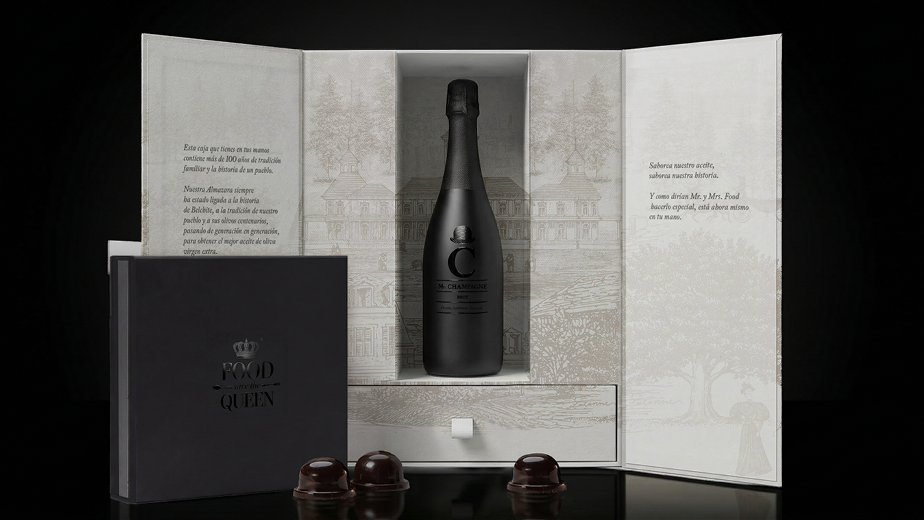
There are chocolates one tastes. And then there are those one recognises. Mr. Bombín belongs, quite unmistakably, to the latter. Not because of excess. Nor because of novelty. But because it understands something rather essential: that flavour, when properly considered, requires form.
On shape, symbol and a certain british inclination
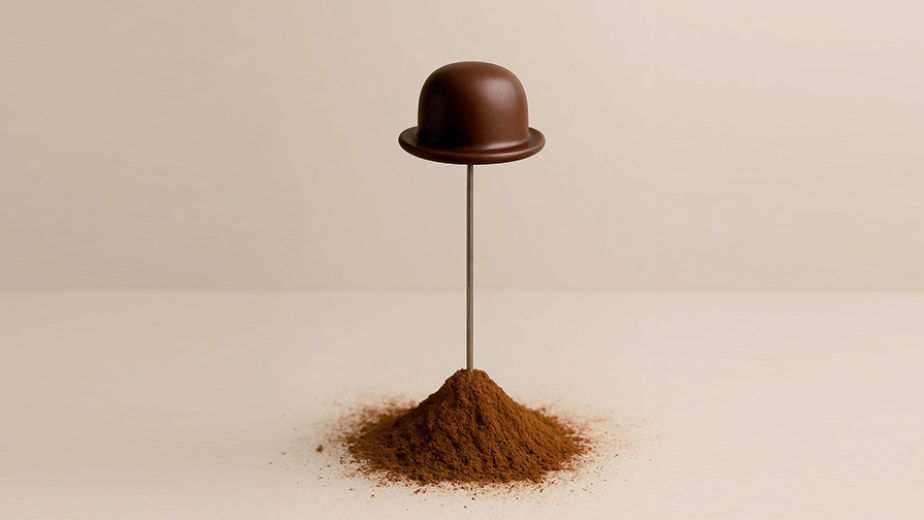
The bowler hat — or bombín, if one prefers — has long existed as a symbol of quiet distinction. Neither ostentatious nor anonymous. Structured, yet slightly irreverent.
It is, in many ways, an object defined by balance. Which makes it, perhaps, an appropriate vessel for chocolate. Mr. Bombín adopts this silhouette not as decoration, but as intention — a gesture that places the object somewhere between confectionery and icon.
Chocolate, properly considered
To speak of chocolate is often to speak of sweetness. Which is, at best, incomplete. Chocolate — particularly in its more refined expressions — is a material of bitterness, texture, and aromatic depth.
And, when handled with precision, it becomes something closer to a language than an ingredient. For those searching for gourmet chocolate, luxury bonbons or chocolate gift boxes, the expectation is often indulgence.
Mr. Bombín proposes something more structured.
Two compositions, two interpretations
Each Mr. Bombín is not simply filled. It is composed.
Chocolate & spice ganache
A dark chocolate ganache infused with Bourbon vanilla, rounded and persistent; Ceylon cinnamon, softer and more refined than its cassia counterpart; and star anise, introducing a subtle, almost architectural lift.
The result is not overtly spiced. But gently layered. A progression rather than a statement.
Brown butter & hazelnut praliné
A second composition, more tactile in nature: beurre noisette, with its characteristic toasted depth, and hazelnut praliné, precise, slightly sweet, quietly expansive.
Here, the emphasis shifts towards texture and memory — a flavour that unfolds slowly and remains.
The alchemist’s construction
Within the FSQ universe, such balance is rarely accidental. It is constructed. Raúl Bernard, as the alquimista behind Mr. Bombín, approaches chocolate not as confectionery, but as composition.
His work moves between precision and intuition, structure and softness, flavour and narrative.
In this sense, Mr. Bombín is less a product than a system of relationships.
Each element placed with intention. Each layer allowed to reveal itself in time.
On pairing (and extending the experience)
Chocolate, when properly understood, invites accompaniment. Not to enhance. But to extend. Mr. Bombín finds its natural counterparts in coffee, where bitterness sharpens its structure; cognac or brandy, adding warmth and length; calvados, introducing a delicate fruit acidity; and red wine, offering depth and contrast.
Pairings that do not interrupt the experience. But continue it.
A gesture in nine pieces
Presented in a box of nine bonbons, Mr. Bombín suggests neither abundance nor scarcity. But proportion. A sequence. An invitation to move through flavour, rather than consume it all at once.
A brief historical aside
Chocolate, it seems, was not always sweet. Among the Mayan and Aztec civilisations, it was consumed as a bitter, spiced preparation — often infused with chilli, vanilla or other aromatics. Sugar, as it happens, arrived later.
Which makes the presence of spice within Mr. Bombín less of an innovation, and more of a return.
Beyond the expected chocolate
For those navigating the world of luxury chocolate, the tendency is often towards decoration. Packaging. Shine. Excess. Mr. Bombín resists this.
It offers instead clarity of form, precision of flavour, and a certain restraint.
Because indulgence, when properly structured, does not require amplification.
A final note
Some objects are consumed quickly. Others ask to be understood. Mr. Bombín belongs to the latter category. A chocolate, certainly. But also a study in balance — one that suggests that even the smallest forms, when carefully composed, may carry a surprising degree of complexity.