There are drinks one consumes. And then there is champagne. Not simply a wine, nor entirely a ritual, champagne exists somewhere in between — a quiet agreement between time, place and intention. And yet, for something so frequently poured, it is surprisingly rarely understood.
What Champagne actually is
A small clarification, if one may. True champagne francés comes exclusively from the Champagne region in France, produced under methods that favour precision, patience and restraint. Everything else — however delightful — is something else. This distinction, much like with caviar, is not about exclusivity. It is about definition.
A brief historical aside
Champagne, rather inconveniently, was not always meant to sparkle. In its earliest forms, the bubbles were considered a flaw — an accident caused by secondary fermentation during the colder months. It was not until the late 17th century that this “error” began to be understood, and eventually embraced. One might say champagne owes its identity to a mistake. A rather fortunate one.
Later, figures such as Dom Pérignon helped refine production methods, though perhaps not quite in the mythologised way history prefers to tell it. And then there is Madame Clicquot, who in the early 19th century developed the riddling technique, allowing champagne to achieve the clarity we now take for granted. Champagne, it seems, has always been shaped by those willing to reinterpret its limits.
On colour
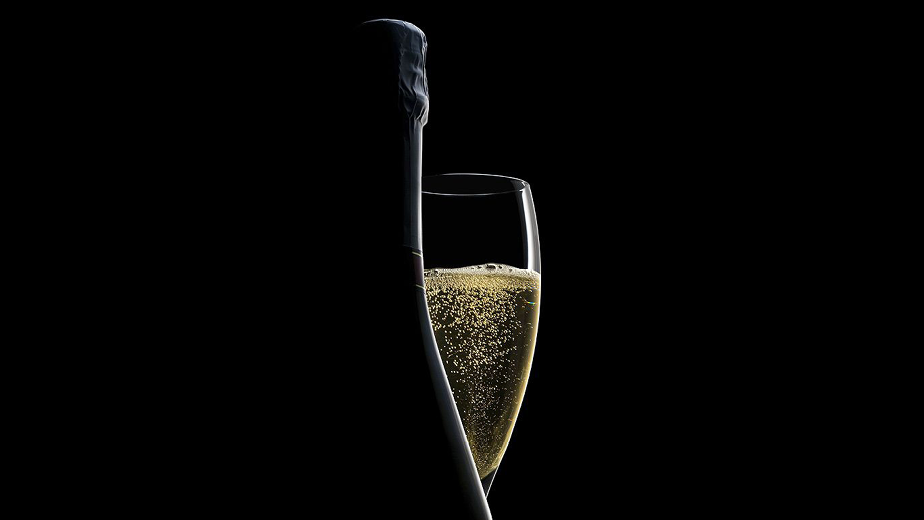
Few tones are as widely referenced — and as vaguely defined — as champagne color. A pale gold, perhaps. Or something softer, closer to ivory. And yet, in the glass, champagne reveals a spectrum far more nuanced: straw yellow, delicate and luminous; golden hues, deeper, more structured; occasionally, a subtle amber — the result of time. The so-called color champagne is less a fixed shade than a reflection of its composition and ageing. A detail often overlooked.
Brut, and the matter of balance
Among the many styles available, champagne brut remains the most widely appreciated. Dry, though not severe. Structured, yet approachable. It is, one might say, the most articulate expression of champagne’s intent. Not overly sweet, never excessive — simply balanced.
On glassware (copas de champagne)
The question of copas de champagne is, perhaps, more important than it first appears. The traditional flute, elegant as it may be, is not always the most generous vessel. A slightly wider glass — one that allows the aromas to open — offers a more complete experience. Because champagne is not only about bubbles. It is about structure, aroma and progression.
On how champagne ought to be enjoyed
There are rules, of course. But one should approach them with a certain flexibility. Champagne prefers to be served well chilled, though never excessively cold, to be poured with care, allowing it to settle rather than rush, and to be accompanied lightly, if at all. It does not demand attention. It rewards it.
A few familiar names
One cannot speak of champagne without acknowledging certain houses. Ruinart, known for its refinement and clarity. Veuve Clicquot, structured and expressive. Moët & Chandon, perhaps the most recognisable, yet consistently composed. Names, certainly. But more importantly, interpretations of a shared language.
Beyond celebration
Champagne has long been associated with moments of celebration. And rightly so. But to limit it to such occasions is to overlook its versatility. It pairs effortlessly with caviar, naturally — but also with more unexpected compositions, where its acidity and precision bring balance rather than spectacle. Within the FSQ universe, champagne is not reserved. It is integrated.
Champagne, or Champán
Whether referred to as champagne or champán, the essence remains unchanged. A product shaped by geography, time and method — but experienced through perception.
A final note
To enjoy champagne properly is not to follow a strict set of rules. It is to understand its structure, to respect its balance, and to allow it — quietly — to unfold. Because champagne, at its best, does not seek to impress. It simply insists on being understood.