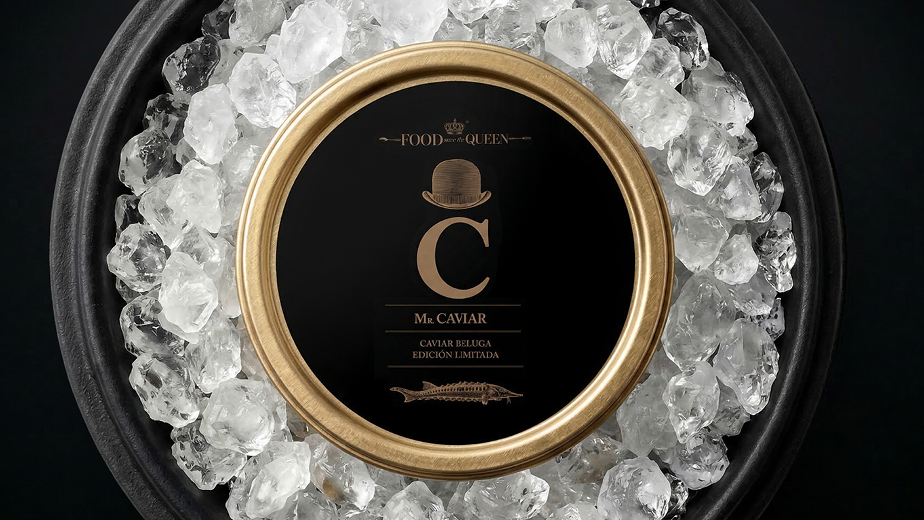
There are few ingredients as widely recognised — and as frequently misunderstood — as caviar.
It appears in conversations about luxury, often invoked, rarely explained. A symbol, more than a substance.
And yet, before one considers how to enjoy it, a quieter question insists on being asked:
What is caviar, exactly?
Caviar is not simply fish roe.
It is, more precisely, the salted eggs of the sturgeon (caviar de esturión), a species whose history predates most culinary traditions that now attempt to define it.
This distinction matters. Because not all roe is caviar — though many would have you believe otherwise.
True caviar carries with it a certain texture, salinity and persistence, a way of unfolding on the palate that resists haste.
A Matter of Variety
Not all caviar speaks in the same tone. Some whisper. Others insist.
Beluga caviar is perhaps the most recognisable — large pearls, pale in colour, with a notably delicate texture. It does not announce itself loudly. It lingers.
Osetra caviar offers a more structured experience — nutty, complex, slightly firmer — often preferred by those who favour depth over subtlety.
Less common, and rather more elusive, albino caviar is prized not only for its rarity but for its distinctive golden hue and refined profile. One might say it is caviar, observed through a different light.
On How Caviar Ought to Be Enjoyed
There are rules, of course. But one must be careful with rules.
Caviar does not respond well to excess handling — or excessive explanation.
It is best served cold, though never frozen. It prefers neutral companions: blinis, perhaps, or a simple base that does not compete. It should not meet metal unnecessarily — mother-of-pearl, if one insists on tradition.
It rewards restraint.
A Question of Pairing
Caviar rarely exists alone. Tradition would suggest champagne. And tradition, in this case, is not entirely mistaken.
And yet, within the FSQ universe, one might consider other possibilities. A clean vodka. Or perhaps something more unexpected.
Not to replace the ritual, but to expand it.
On the Price of Caviar
Inevitably, the question arises: why is caviar expensive?
The answer, like the ingredient itself, is layered. Time. Scarcity. Technique.
Sturgeon take years — sometimes decades — to reach maturity. Production is precise, often limited, and increasingly regulated.
The price of caviar is not simply a reflection of rarity. It is a reflection of process.
A Final Note
There is a temptation, when approaching caviar, to seek the correct way. The proper ritual. The definitive guide.
And yet, perhaps the more interesting approach is this:
To understand its structure.
To respect its balance.
And then — quietly — to make it one’s own.